

Cane and Sugar Industry
Inspiring sustainable cane and sugar industries through pioneering training solutions.

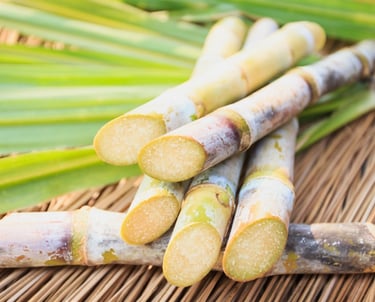
Cane Sugar Manufacture / Fabrication du sucre de canne - 168 hours
Sugar Cane Agronomy / Agronomie de la canne à sucre - 171 hours
Pan Boiling, Crystallization and Exhaustibility - 21 hours
Juice heating, clarification and filtration - 21 hours
Sugar quality - 9 hours
Cane Sugar Manufacture / Fabrication du sucre de canne
Objectifs
Apporter aux ingénieurs des connaissances solides sur le processus de fabrication de sucre et apporter aux techniciens de fabrication des connaissances en ingénierie et sur les principes utilisés dans les sucreries
Développer les compétences professionnelles des personnes occupant ou se préparant à occuper des postes à responsabilité dans des entreprises de fabrication de sucre
Procurer aux personnes occupant des postes de conseil ou de recherche une connaissance approfondie des techniques spécifiques utilisées dans les sucreries
Module
Manutention et préparation de la canne, broyage et imbibition
Jus : réchauffage, clarification et filtration
Evaporation
Cuisson, cristallisation et exhaustivité
Turbinage et conditionnement du sucre
Qualité du sucre
Raffinage du sucre
Production de vapeur et génération d’électricité
Contrôle de pollution et systèmes sanitaires
Contrôle chimique et inventaire
Automatisation d’usine
Public ciblé
Responsables et assistants d'usine et de fabrication, ingénieurs, consultants, chercheurs et techniciens.
Sugar Cane Agronomy / Agronomie de la canne à sucre
Objectifs
Développer les compétences professionnelles des personnes occupant ou se préparant à occuper des postes à responsabilité dans des compagnies sucrières
Développer les aspects théoriques et pratiques fondamentaux pour ceux qui exercent des fonctions de conseil, de vulgarisation et/ou de formation
Apporter une base solide en ce qui concerne les principes et pratiques d'agronomie de la canne.
Module
Botanique, physiologie et agro météorologie
Amélioration variétale
Biométrie – principes de base
Maladies : symptomatologie, transmission et mesures de lutte
Répartition, biologie, écologie et lutte contre les ravageurs de la canne à sucre
Gestion des mauvaises herbes, herbicides
Sols et fertilisants
Physique des sols, irrigation et drainage
Opérations culturales
Transport et mécanisation agricole
Public ciblé
Les agronomes, les responsables des champs les responsables de formation, les consultants, les chercheurs, les agents de vulgarisation et tous ceux occupant des postes à responsabilité dans le domaine de la culture de la canne à sucre ou dans des organisations associées à l'industrie sucrière.
Overview of Sugar Cane Agronomy
Course objective
To develop the professional skills of persons occupying or preparing to occupy positions of responsibility in sugar cane growing companies.
Introduction to the sugar cane plan
Sugar cane cultivars/varieties
Cultural practices
Sugar cane nutrition and fertilization
Disease control
Irrigation
Weed control
Pest control
Target audience
Persons occupying or preparing to occupy positions of responsibility in sugar cane growing companies.
Fees
MUR 24,000 per participant
Overview of Cane sugar manufacture-Principes et pratiques de la fabrication du sucre de canne
Course objective
To develop the professional skills of persons occupying or preparing to occupy positions of responsibility in sugar producing companies
Course content
Module 1: Delivery and handling
Module 2: Cane preparation and juice extraction
Module 3: The clarification station
Module 4: The evaporator station
Module 5: The pan boiling station
Module 6: The crystallizer and centrifugal station
Module 7: Basics of sugar refining
Module 8: Chemical control
Target audience
Factory and process managers and their assistants, engineers and technicians
Fees
MUR 24,000 per participant
Good practices in Sugar Cane Agronomy
Course objectives
Describe common weeds of sugar cane and demonstrate methods of control
Explain the characteristics of fertilizers used in sugar cane production
Describe insect pests of sugar cane and demonstrate methods of control
Explain the irrigation water requirements of sugar cane and apply different methods of irrigation
Understand the operations involved in the mechanical planting of sugar cane and understand the processes of harvesting and loading.
Course content
Weed management
Soils and fertilizers
Insect pests: transmission, control and management
Soil physics, irrigation and drainage
Mechanization
Target audience
Factory and process managers and their assistants, engineers and technicians
Fees
MUR 50,000 per participant
Centrifugals and Sugar Conditioning
Course objectives
Master batch processing for consistent, high-quality products and ensure stable operations with minimal defects. Apply proactive maintenance to reduce downtime and extend equipment life
Manage challenges in continuous processes with low-grade materials and improve conditioning processes for better product quality
Course content
High grade: batch, continuous, operation, maintenance
Low grade: continuous, operation, massecuite conditioning
Target audience
Factory and process managers and their assistants, engineers and technicians
Fees
MUR 14,000 per participant
Advanced Evaporation Systems in the Sugar Cane Industry: Optimization, Performance and Maintenance
Course objectives
Understand the different types of evaporators used in multiple-effect evaporation systems, including their operation and efficiency advantages in concentrating liquid
Grasp the various ways evaporator stations can be arranged for optimal steam economy, including the principles of heat recovery and energy efficiency
Learn how to evaluate the performance of evaporator systems, including calculating steam requirements, ensuring optimal operation, and identifying areas for efficiency improvement
Will become familiar with the cleaning techniques for evaporators, both mechanical (e.g., scrapers, brushes) and chemical (e.g., acid wash), and the importance of maintaining clean systems for efficient operation
Understand the role of condensers, cooling ponds, and cooling towers in the evaporation process, focusing on heat exchange and cooling methods to maintain efficient operation
Course content
Multiple effect evaporation - types of evaporators
Arrangements of evaporator stations and steam economy
Checking performance and steam requirements
Evaporation cleaning: mechanical, chemical
Condensers, cooling ponds, cooling towers.
Target audience
Factory and process managers and their assistants, engineers and technicians
Fees
MUR 14,000 per participant